Showing posts with label psychology. Show all posts

Saturday, November 6, 2010

the goddess of 1967


I have recently watched the indie Australian roadmovie "The Goddess of 1967" (2000), the title of which refers to a car. That's right, a car. But it's not any car, it's the so-called goddess which is English for the French word déesse = DS = Citroen DS (nice play of words ;-).

The movie starts with a mysterious and eccentric Japanese buyer who flies to Australia to pick up the goddess, he had purchased online. This adventure is the context for following the car's and its owner's history back several generations. The main character of the movie is the actual car owner, a blind young woman, with a more than difficult past that will have to be explored.

I am not quite content with the directing by Macau-born Clara Law and husband Eddie Fong. The slow pace of the movie is not balanced and makes it seem draggy. Moreover some issues seem to be left unfinished, some choices unexplained, some scenes superfluous, some characters (like the Japanese man, or the young woman's mother) don't seem to develop and the flashbacks segment the narrative in an unfavourable way.

Nevertheless, the movie's strong points are amazing and make me recommend the movie without hesitation: the amazing cinematography (exquisite frame composition, beautiful colors), the strangeness/bizarreness (at least to me, reminiscent of Arizona Dream), the serious, almost distressing themes (death, coming of age, child abuse, revenge etc.), the focus on the female universe (even the car is a feminine entity) and the brilliant(!) performance by Rose Byrne.

Watch a "behind the scenes" documentary about the movie here: part1, part2, part3

I watched it since it was suggested by Scott in a comment to a post by Danica on Kitsune Noir and I loved the trailer (music: Walk Don't Run 64 by The Ventures), which is why I am sharing it here as well:

Friday, November 5, 2010

burnout


Note: Sorry, it's one of those finds, the author of which remains a mystery to me. If you know him/her, drop me a line and I will credit.

Friday, October 8, 2010

of mothers and sons


She's always been an airheaded lady but quite adorable in her own way. She never stayed long for a visit, after all, time was short and she had a dozen small things to take care of. Never tiring she ran around all day, like a whirlwind, carrying bags from here to there, her hair in a mess, her coat tied at the wrong buttons.

With age she became increasingly dependent. And forgetful, but considering her characteristic fuzziness, that never seemed particularly peculiar. She misplaced things and failed to find them, she needed help with transportation, fixing things around the house. She started calling several times a day sharing the same story over and over again. When confronted with her own disorientation, she remained annoyingly stubborn, refusing to admit her own weakness. And when she was exposed, she always covered it with an indulgent smile.

Today she failed the clock test. It shouldn't matter anymore whether she is strategically faking or not. It shouldn't matter that the tone of her voice sounds like that of a spoilt child. It shouldn't matter that you have to check up on her several times a day, that she embarasses you in public, that you have to pay for her medicine and mend her mistakes. It doesn't matter whether, considering your common history, she deserves your loyalty or not. Does it?


photo by Yuan Xiaopeng
related posts: Maira Kalman & Phillip Toledano's "Days With My Father"

Saturday, May 8, 2010

the white ribbon - review


***may contain spoilers***

Austrian filmmaker Michael Haneke's "The White Ribbon" was an unexpected find, like a breath of fresh air in a landscape of both mainstream movies and art films that have all forgotten what it's like to be subtle . "They don't make movies like this very often", my friend said. No, they don't.

The movie's strong points are: Incredibly authentic rendition of time, space and characters, wonderful framing and camera work, crushingly magnificent and intimidating dialogues, excellent performances and actor choices.

I did however feel, there were some inconsistencies in the plot (Why did Sigi never tell on the ones that harmed him, once he recovered? Why did the midwife never come back and where did the doctor's family dissapear to?).

But all in all, I believe that it might have been the director's intention to confuse, in order to help the viewer identify with the perspective of the school teacher, who was himself far from beeing the omniscient narrator, we have all been used to lately. Haneke's movie was not going to tell us "who" or "why", it's not about blame or motivation behind actions. It's simply about telling a story of a series of strange and violent events happening in a small rural village in the north of pre-WW I Germany.

And now, this might be my own personal opinion, but I strongly disagree with the idea that Haneke's village is to be seen as a microcosmos to reflect Germany as a whole and that his movie is about the depiction of the generation of children who would grow up into the fascist youth of WW II (you see, that would not be subtle at all). I believe that it stands for how, on a global level, a context of sexual and emotional repression, dogmatic religiosity, familial abuse, mistreatment and oppression of women, strong patriarchal values and social hierarchies can breed evil forces that will eventually exteriorize themselves.

I have found a user comment on imdb that I find quite appropriate:
"A powerful film, sharing so much information without any answers; it takes our mind into overdrive, trying so hard to find a reason for it all. But sometimes there are none; sometimes bad things just happen."

poster source. previously featured trailer. read an interview with Haneke here.

Thursday, May 6, 2010

interactive billboard against aggression


This video speaks for itself:


music: album intro The XX

Wednesday, February 24, 2010

digital consciousness


I've recently come across an interesting piece of text by Headmine, I have shared below. It highlights an interesting problem that digital social media creates: The conscious perception of any given moment seems to have shifted, to have been delayed until the moment it is shared.

"There’s a new sense of Now emerging from the web and it’s starting to become more present than the here and now in front of us. The events in our lives only seem to come into full existence as we post them online. A moment that can’t be digitized and shared in one form or another is in danger of never happening.

Our parents took photos to try to hold on to the past. We take photos to create the present.

We point our mobile devices at the things and events in our lives not to remember them but to make them real. This concert, this forest, this meal with friends hasn’t really happened until it’s made its way online. The cutting edge of experience is shifting away from our senses, moving outside of our consciousness, and getting entangled in our electronic media.

Now has become the moment when the fragments of our ‘real’ lives are released into the cloud. Now is now the ephemeral membrane between us and the network.

'Google organized our memory. Real-time search organizes our consciousness.' - Edo Segal"

Perhaps we could say that sharing enhances conscious perception.

“It’s funny how the colors of the real world only seem really real when you viddy them on the screen.” -A Clockwork Orange

Saturday, October 24, 2009

the psychiatrist


Who is the therapist and who is the client? This is a wonderfully poetic and surreal animation by Emily Howells, called "The Psychiatrist". The oddball paranoid versifier is voiced by Roger McGough who speaks a fantastical, fearful and funny imagery. A Must-See!

Tuesday, October 20, 2009

taking the "fiction" out of "science fiction"


First in a series of posts on the future of brain imaging technology (I will use this for a debate in class with the students): CBS's 60 Minutes with Lesley Stahl: "How Technology May Soon 'Read' Your Mind" (picture via Bertrand Thirion).


Watch an interesting lecture on this topic by Martha Farah here ("Imaging the Brain, Reading the Mind" is a Northwestern University public outreach program to help the general public understand the impact of cutting-edge brain imaging technology on human health, law, and ethics).

Saturday, October 3, 2009

aurora liiceanu


Auora Liiceanu (68 years old) has a PhD in psychology, is an expert in anthropology and social psychology and has recently published a book "Prin Perdea" ("Through the Curtain"), where she describes some of the most delicate and unknown episodes of her life. Even though she says that she regrets a little bit having written and published it now, I cannot wait to go back home and buy and read her autobiographical book! It's not about wanting to hear wild confessions or someone serve their inner self on a plate. This is actually what she avoided doing with her book. In fact, I believe, it may be a very good way of educating younger generations by means of illustration and commentary.

Prominent figure of Romanian intellecualism, ex-wife of Gabriel Liiceanu (she divorced him right before giving birth to their child), Aurora Liiceanu lost her position as a researcher at the psychology institute, after the "transcedental meditation"-scandal during communist times in 1982. She became a cleaning lady at the "Suveica" factory and has sewn dresses, in order to be able to buy her son (Stefan, he now lives in Japan) a computer. She always had a "plan B" and has never victimized herself.

After reading Gabriel Liiceanu's book "Scrisori Catre Fiul Meu" ("Letters to My Son"), Aurora's Liiceanu's book will probably give a different perspective on raising her son and I find it quite interesting, how this person (even though he pursued a totally different career than his parents and moved to Japan) is represented in contemporary Romanian essays and writings, as he is portrayed and mentioned by his parents.

I have recently read two interviews on her that I highly recommend (in Romanian): Evenimentul Zilei & Capital; picture source

"We are all looking for mental balance, because after all, everything that matters is whether one is comfortable with oneself, whether one recognizes oneself in who one is or believes to be."

Friday, September 25, 2009

slaves


In one of her posts, ecila recommends the documentary "Sex Slaves". I like how it portrays the fact that indeed a large amount of women (10%) actually get into this business absolutely unsuspecting of what awaits them. Because of a lack of education and future prospects, many girls from poor countries fall in the traps that hide beneath promicing ads for work abroad (especially since there are also many successful stories of hard-working people sending money home from abroad). And it gets worse: some girls are sold by their own aquaintances. Once sold and put to work, they are kept in inhumane conditions, and treated like meat. This documentary shows that it's never a question of choice. Not even after they start working. They simply cannot run away. Many are kept under lock and key, under constant surveillance. The pimps maintain control over them making use of psychological terror, threatening them and their families. The police is most of the times involved in the business. Many girls are made to believe that by working, they can buy their freedom back: they work for free, believeing that this way they can pay back the money they were bought for. And it gets worse: because, by a certain time they will have debts, or because some crash under the influence of terror, they "decide" to stay. Who is to blame? The law, the media, the police, the society. It's brutal, inhumane, unforgivable and it's happening as we speak.


I want to take this opportunity and recommend two movies: "Trade" and Lukas Moodysson's "Lilja 4-ever". While "Trade" manages to portray some of the above mentioned issues in an appropriate way, "Lilja 4-ever" is a true masterpiece, one that makes you forget that you watch a movie, one that makes your heart ache: the feeling of being lost, as well as the impact of intimidation and terror on the psyche is as real as one can be. "Lilja 4-ever" is an absolute must!

Tuesday, September 22, 2009

reading kafka makes you smarter


Franz Kafka in 1905. Photograph: Hulton Archive/Getty Images; picture source

Research from psychologists at the University of California in Santa Barbara and the University of British Columbia claims to show that exposure to surrealism may sharpen your cognitive functions and make you better at recognizing patterns: Subjects who had just read Kafka's "The Country Doctor" were better at recognising patterns in a grammar test, compared to subjects who had read a more plausible version of the same story.

"The idea is that when you're exposed to a meaning threat –– something that fundamentally does not make sense –– your brain is going to respond by looking for some other kind of structure within your environment", said Travis Proulx, a postdoctoral researcher at UCSB and co-author the article. "What is critical here is that our participants were not expecting to encounter this bizarre story. If you expect that you'll encounter something strange or out of the ordinary, you won't experience the same sense of alienation. You may be disturbed by it, but you won't show the same learning ability. The key to our study is that our participants were surprised by the series of unexpected events, and they had no way to make sense of them. Hence, they strived to make sense of something else."

BUT: Thus far, the researchers have identified the beneficial effects of unusual experiences only in implicit pattern learning. It remains to be seen whether or not reading surreal literature would aid in the learning of explicily studied material (e.g. for exams) as well...

Thank you ecila for the link.


I shall now take advantage of this opportunity, and additionally post the award-winning wonderful animation "Kafka Inaka Isha" by Koji Yamamura, which is based on Kafka's "Ein Landarzt/ The Country Doctor" and is, in my opinion, equally disturbing and absurd as the original writing (caution: it might seem quite distressing and nonsensical to anyone not familiar with Kafka's deliberate effort to disorient). I love the animation technique and it somehow reminds me of Caroline Leaf's "Two Sisters" animation, as it manages to convey the impression of a dream (distorting images, as if they were constantly flowing and impossible to grasp).


Thursday, September 10, 2009

networking


A leading neuroscientist warns of negative changes to the 21st century mind as a result of using social networking sites like Facebook. Changes include infantilisation, attention deficiency, selfishness, erosion of identity and an inability to empathise with others.

Interview with neuroscientist Lady Susan Greenfield, Professor of Synaptic Pharmacology at Lincoln College, Oxford and Director of the Royal Institution.

Read more here.

I agree that the environment can change the brain. I agree that social networking sites have no cohesive narrative or long-term significance and that, as a result, a brain might evolve with a shorter attention spam, craving for instant sensation (I especially like this part). But what in fact IS changing childrens brains is the environment as a whole. As for the question of "what is an interaction" and the "craving for instant sensation": I mean, common, there was no Susan Greenfield back then to warn us about the changes in our synaptic activity when the phone was invented!

I also agree that 900 facebook "friends" cannot be called friends. And that facebook represents a true menace in terms of possible addiction. But that just depends on the user. I seriously doubt that one can generalize to the entire facebook population like that.

To sum up: Facebook can be very useful (unless you spend hours feeding your virtual pet or doing quizzes that have no point) and fun. But, as with all things, it should not be used excessiveley.

Wednesday, September 9, 2009

immersion


Monday, September 7, 2009

the ugly


One of five Romanians has already met or will meet "the Ugly" at least once in their lifetime. Neagu Djuvara or Mihaela Miroiu have encountered one of these meetings. You can see and hear their and other heroes' story now. Why heroes? Because their stories are real and full of courage. It happens for the first time in Romania: The ones who have met the Ugly are speaking publicly about it.


Listen with an open mind. Learn.

Follow this link. Each wallpaper hides a story. All stories have English subtitles.


A coproduction The Carter Center and Deutsche Welle

Sunday, August 30, 2009

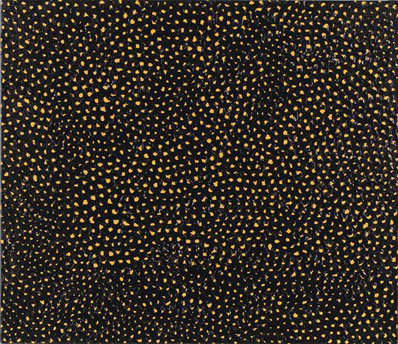
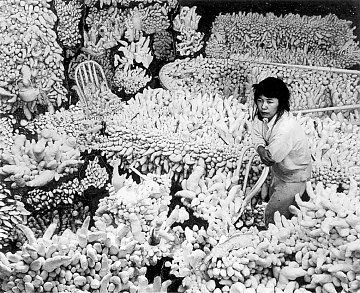
we are all dots.


“I, Kusama, am the modern Alice in Wonderland.” (at the press release of the "Alice in Wonderland happening",1968)

"Yayoi Kusama was born in 1929 in Matsumoto City, Japan. She is best known as a plastic artist, although she has written several books, designed fashion, and made a film ('Self-Obliteration'). Despite having had a heavy influence of Andy Warhol and many other New York artists of the time, she remained relatively unknown.

She was born into a reasonably wealthy family, driven and governed by her strict mother, who wanted her daughter to be raised in a traditional way. The constant pressure and rejection by her mother may have triggered her illness. At the age of ten Kusama's mental illness became apparent when she began to see visions of proliferating patterns made up of dots, nets and other shapes. These hallucinations were extremely frightening, as they threatened to dissolve her self into the patterns she had been seeing.

'One day I was looking at the red flower patterns of the tablecloth on a table, and when I looked up I saw the same pattern covering the ceiling, the windows and the walls, and finally all over the room.'

Whether by accident or not, Kusama discovered that through drawing and painting these experiences, she was able to gain some kind of control over them. Her mother did not share this view and violently reacted to Kusama's attempts to spend her time on art, subjecting her to torrents of physical and mental abuse.

In 1948 she left home and attended Kyoto Municipal School of Arts and Crafts for around a year and a half. She was allowed to do so under the pretext that she would study traditional etiquette at relatives in Kyoto. In 1952 she had her first solo exhibition at the Matsumoto Civic Hall. Unfortunatelly, most of the early works have been destroyed by the artist herself. At about the same time she started undergoing psychiatric treatment.

In 1957 her parents gave her money to support her moving to NYC under the condition that she would never return. She spoke little English, knew few people and had only her portfolio to aid her attempts to find work as an artist. However, by 1959 she had her first US solo exhibition, at the Brata Gallery. Furthermore, her work had clearly changed in style since her arrival in the US: from smaller, more delicate abstractions into huge mural-sized paintings. Her art revolved around the creation of repetitive images, involving polka dots and what she calls 'Infinity Nets' (a web of color stretching across canvasses and almost any object) being the most frequent patterns used.

During her time in New York she met many prominent names of the 60s New York art scene, the most famous of whom would be Warhol. Her art had by now extended to sculpture and installation art, making her a pioneer. Many of her sculptures are ordinary objects completely covered with stuffed cloth phalluses (she refers to them as 'Compulsion Furniture'). For example, she covered a row-boat with these phalluses, then took a picture and made 999 prints of it. With these prints she covered all the walls of a room, placing the actual row-boat in the centre and this became her work , playing on ideas about the reproduction of art and repetition.

Kusama's work progressed onto photography and performance art. In 1967 she staged 'Body Festivals' and 'Anatomic Explosions'. These basically involved naked people and having polka dots painted on them until the police inevitably turned up. Numerous happening against the war involving naked people and public orgies followed.

In the early 70s Kusama returned to Japan. She now lives in a mental institution and has her own private studio to create work.

Themes and motivations:

Kusama calls herself an "obsessional artist", self-obsession permeates throughout Kusama's artwork as it all relates to her own attempts to come to terms with her psychological and mental condition.

Her representation of phalluses depicts her fear of obsessive sexual motifs.

"As an obsessional artist I fear everything I see. At one time I dreaded everything I was making. The armchair thickly covered in phalluses was my work done when I had a fear of sexual visions."

Infinte repetitions, patterns and ubiquitous polka dots are her favourite motifs, which she explores through painting, collage, light installations and other forms.

"A polka-dot has the form of the sun, which is a symbol of the energy of the whole world and our living life, and also the form of the moon, which is calm. Round, soft, colourful, senseless and unknowing. Polka-dots can't stay alone; like the communicative life of people, two or three polka-dots become movement... Polka-dots are a way to infinity.

Her work became increasingly dematerialized and less obsessive-compulsive throughout her life, which attests the fact that she managed to use art as a form therapy for herself.

"Every time I have had a problem, I have confronted it with the ax of art."

"It was not so simple, not so easy to come up with this way of living that I've had. I was given a sad life by fate, but I think I won a happy life. . . . Not one day has passed when I didn't think of suicide, but I'm very glad to be alive now. Most people are so preoccupied with their illness, sickness, and they live a very ordinary life. I was so involved and so engrossed with painting, and knew from my childhood that it could help me to overcome unhappiness. If it were not for art, I would have killed myself a long time ago."

To me she is one of the major sources of inspiration. Not only has she always been open with respect to her own mental illness, but to her it is irrelevant whether her work is recognised or not. The creation of the piece is the goal itself, the therapy.


check out this collection of dots